Cover image for Far Future Friday: Painting Crimson Fists, Part One

Welcome to Far Future Friday, where I take a crack at painting different sci-fi miniatures in 15mm - and show you how to, too! Today’s post centers on the Crimson Fists, 40k’s original poster boys, as seen on the cover of Rogue Trader and the third edition Space Marine codex. Although I never really picked a Chapter when I played 40k, I decided on Crimson Fists for this initial 15mm Friday because of the awesome sculpts of Pizzagrenadier. I’m using his Bad Ass Tyrant’s War Beakies (scaled up to 15mm) for all my Marines for when I play 15mm 40k.

The paints

When it comes to painting Crimson Fists, you’ll need only a handful of paints: a blue for the armor, a gunmetal to undercoat the bolter casing/magazine, and a red for that trademark crimson fist.

For the blue, we’re attempting match Games Workshop’s Kantor Blue. For this, I use Golden’s Pthalo Blue (Red Shade) from their High Flow Acrylics range as a more cost-effective option - a dropper bottle of Pthalo Blue is $14.75 USD for a 4oz/118mL bottle, while a pot of Kantor Blue is $4.55 USD for a 12mL pot.

You have a couple options for the gunmetal: I typically AK Interactive’s Gun Metal, but you could also use any other silver metallic (or even a dark warm grey like Pro Acryl’s aptly named Dark Warm Grey).

The crimson color can be anything from Army Painter’s Crimson Hand Red to a standard Alizarin Crimson from the acrylics aisle. I used Golden’s Napthol Red Light.

The process

Start from a grey primer. If I’m priming with a rattlecan, I use Colour Forge’s Standard Grey. If I’m using an airbrush to prime, I use Stynylrez’s standard grey primer.
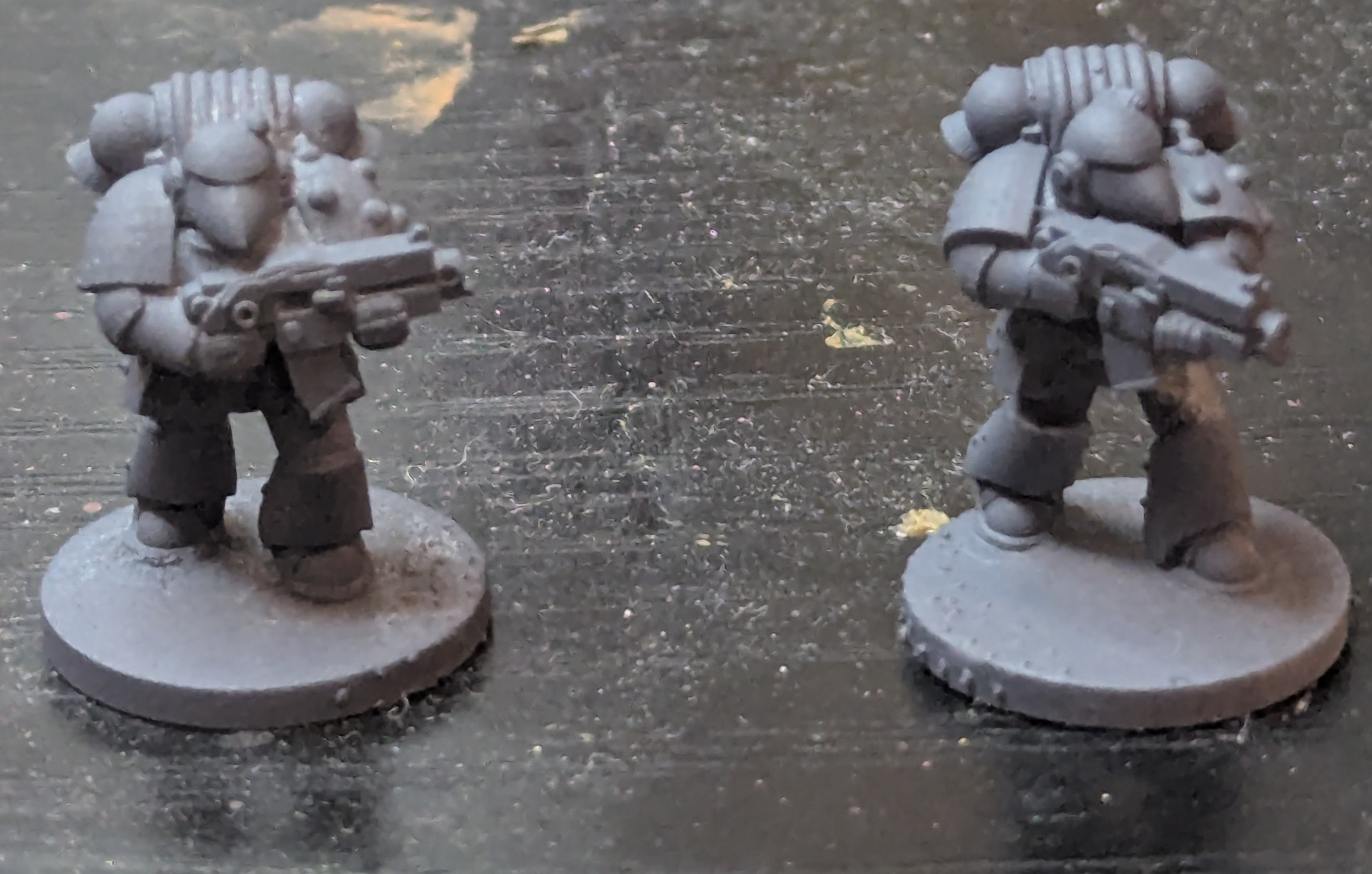
Grey primed Crimson Fists miniatures

From there, basecoat the entire model with Pthalo Blue (Red Shade), except for the hands, pouches, grenades, bolter casing, and any visible cabling. Don’t worry too much if you get paint on any of the aforementioned areas - we’ll be going over them with other paints anyway. Especially don’t worry if you’re using an airbrush for this step, because you will get paint in areas that you don’t mean to.
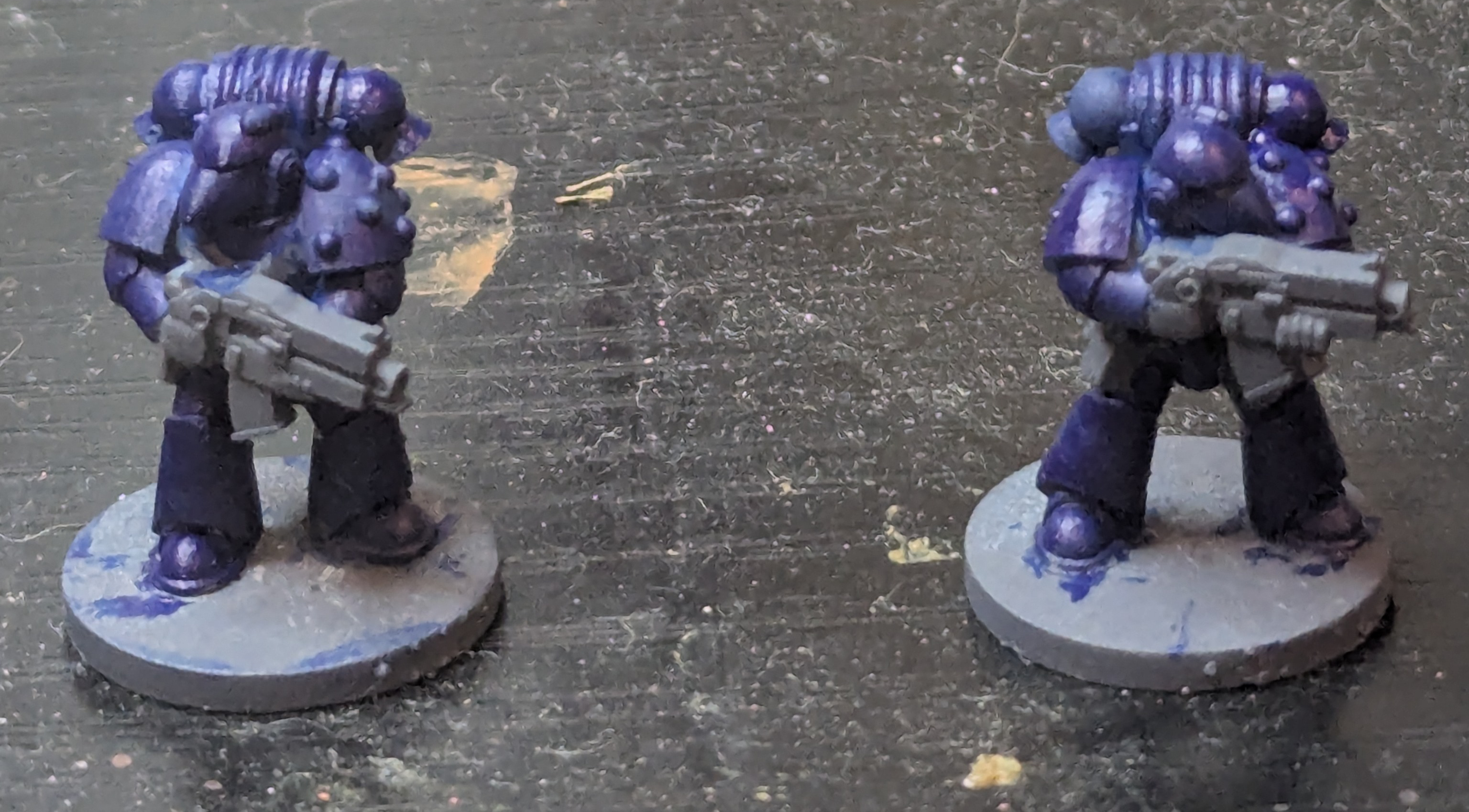
Crimson Fists with blue basecoat applied

Paint the bolter case in your preferred gunmetal color. If you feel like being extra fancy, you can repaint over everything except the magazine, the ejection port and the little front divot in a warm grey color to simulate the fact that there’s a plastic/metal case overtop of the bolter’s innards.
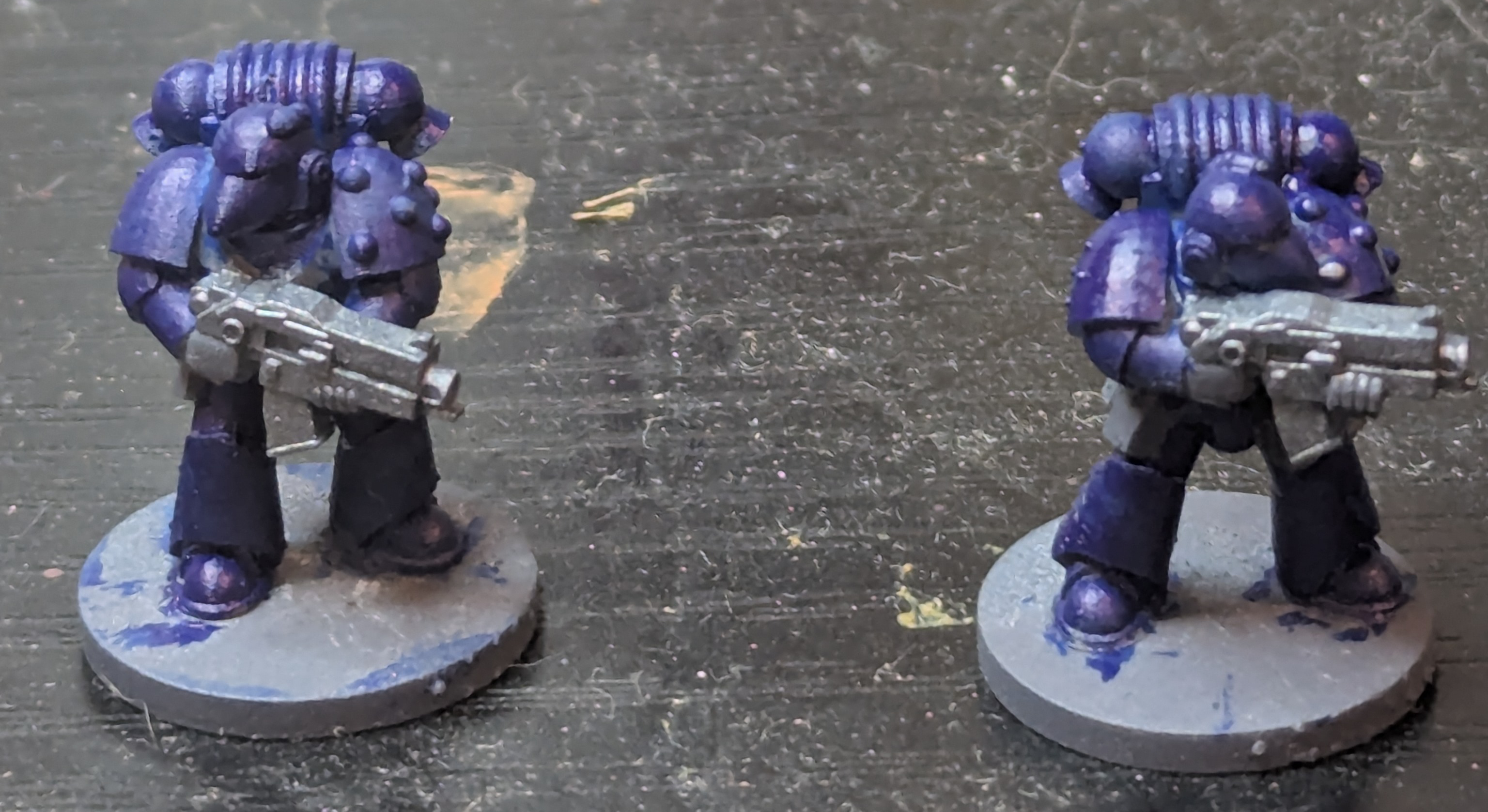
Crimson Fists with gunmetal bolter casing

If you’re painting non-veteran Crimson Fists, paint only the left hand red. If you’re painting veterans, paint both hands red.
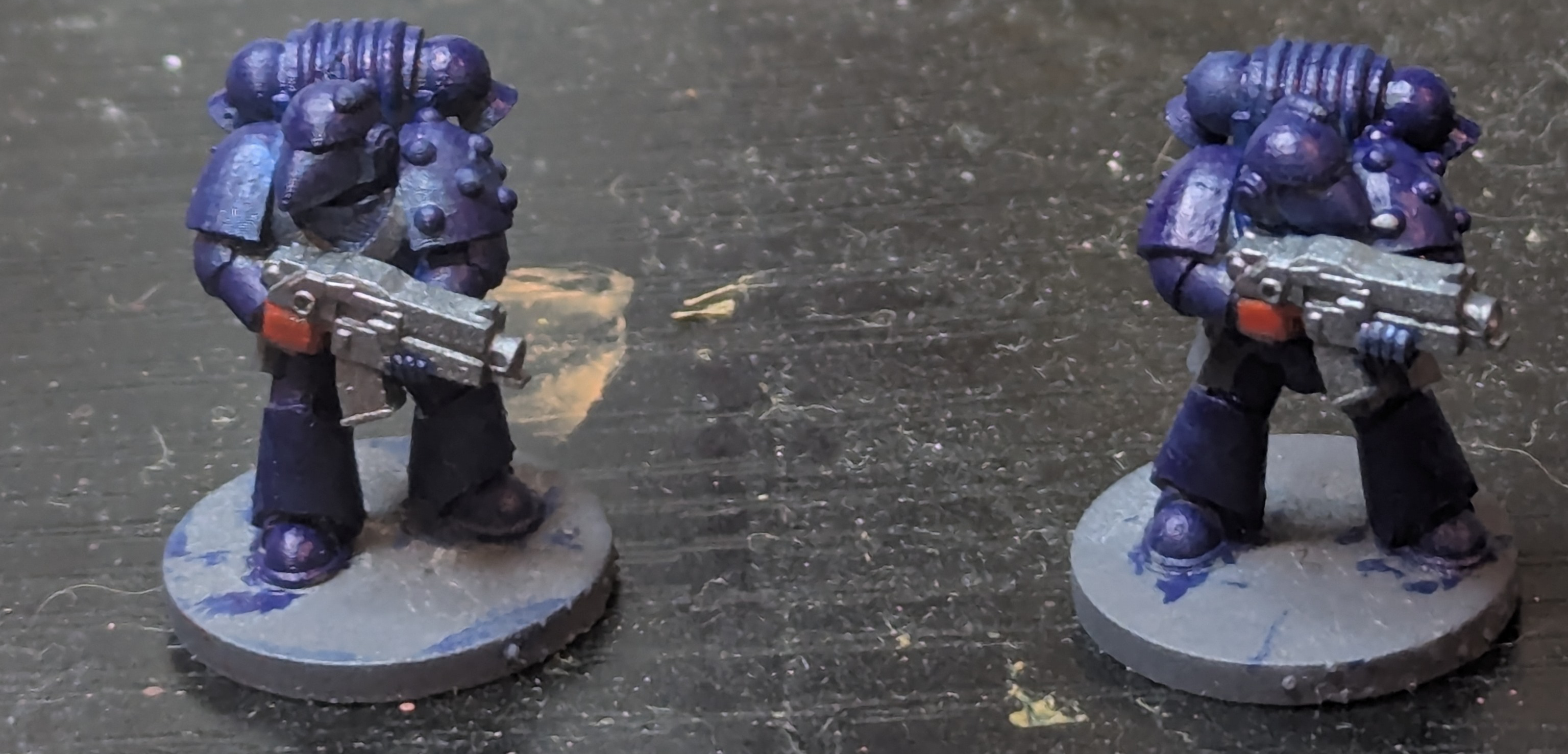
Crimson Fists with red hands painted

Paint the pouches using a light brown/leather brown color (I think I used Army Painter’s Leather Brown), and then paint in the pouch buckles using the same gunmetal color you used for the bolter. Paint any fragmentation grenades on the marine’s belt using a medium or dark green. I used AK Interactive’s Medium Green.

Drybrush the coils on the back of the backpack with the gunmetal, as well.
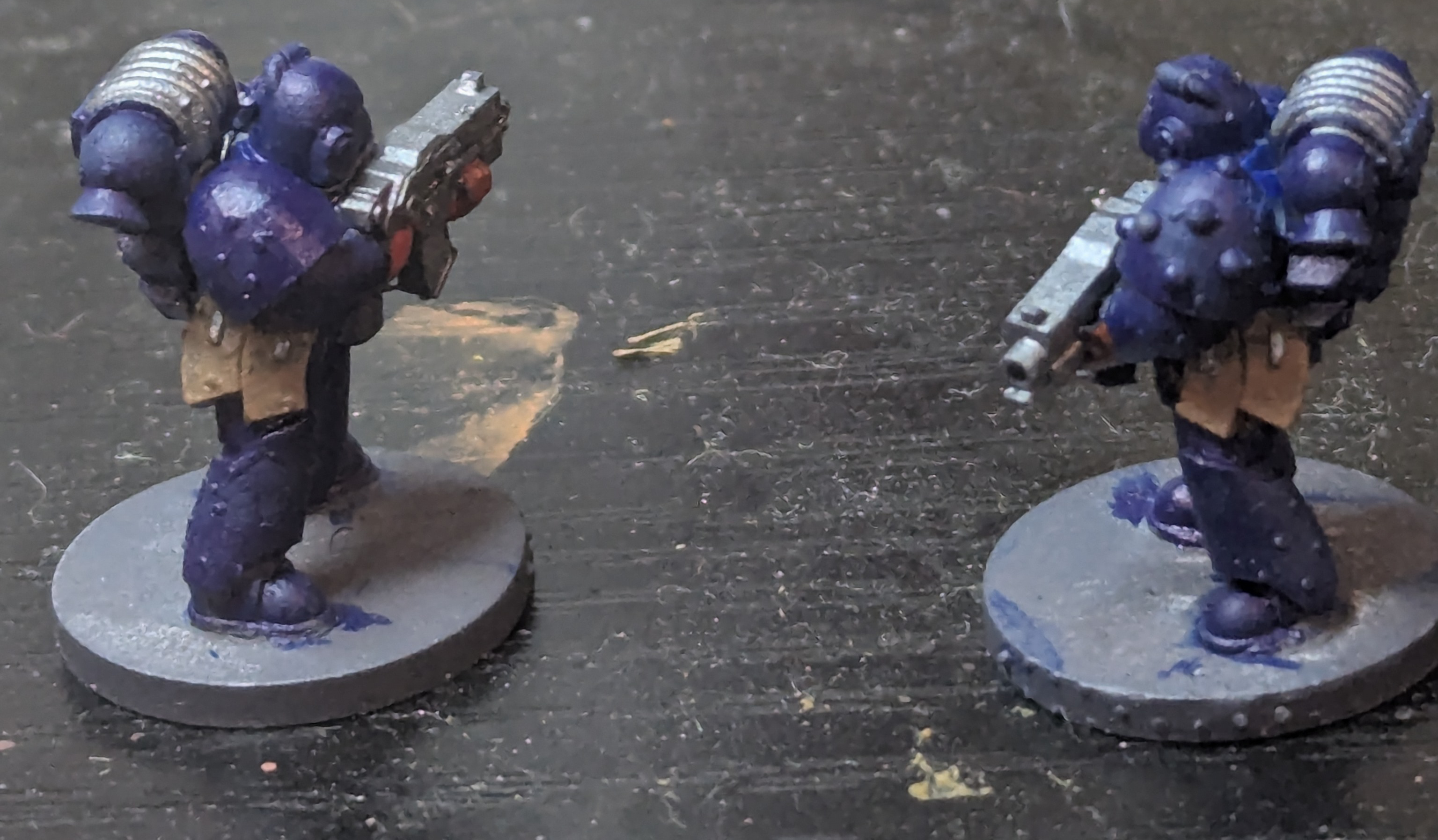
Crimson Fists with pouches and grenades painted

When it comes to basing, I went for as simple as possible. A quick coat of Army Painter’s Dirt Spatter on the base and the rim makes for a simple enough base. If you want to go fancier (not really needed at this scale, IMO), you could paint on some PVA/white glue and flock the base with some static grass and rocks.
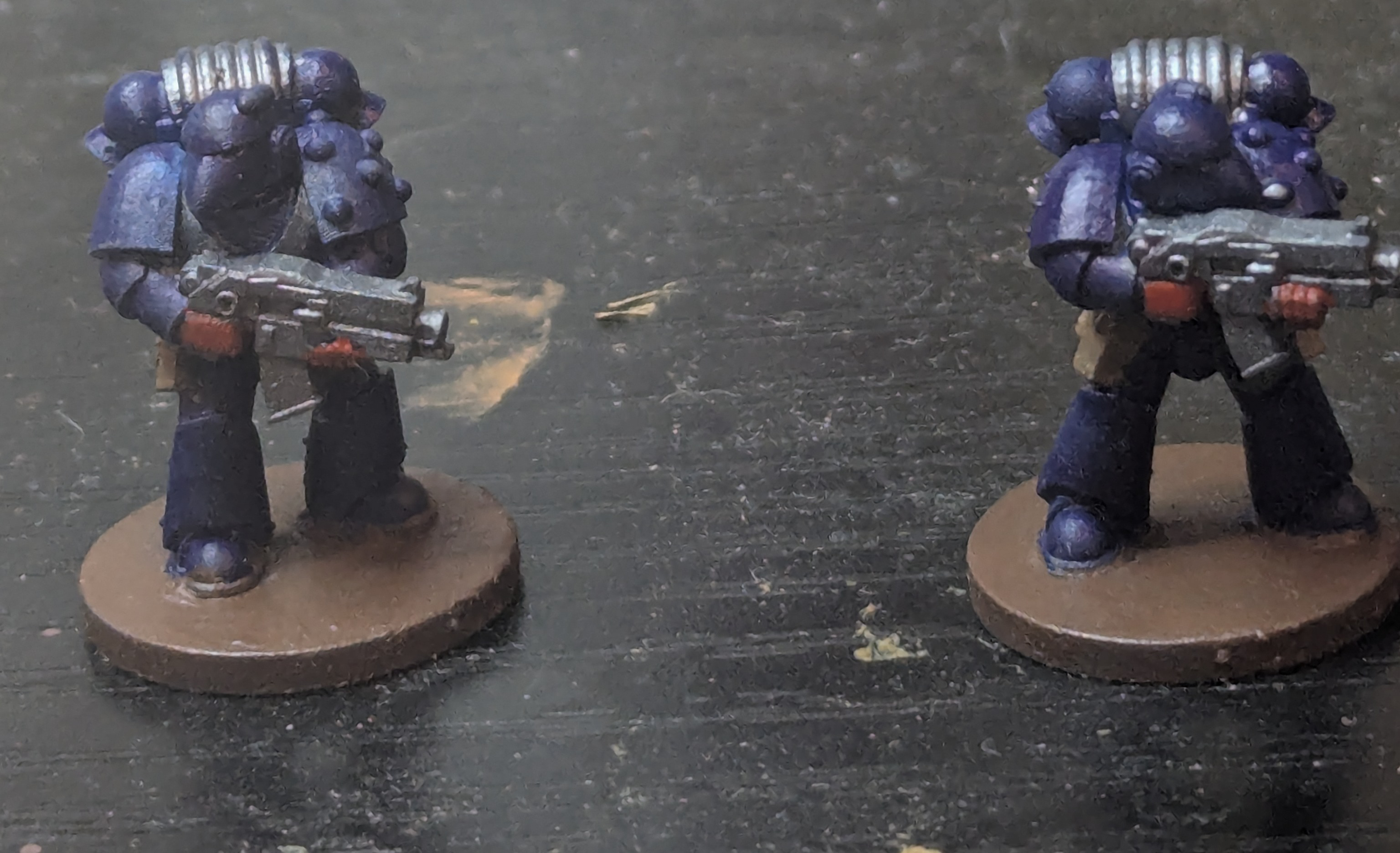
Completed Crimson Fists miniatures with bases

And that’s it, our Crimson Fists are done. These two guys took me about 20 minutes total for both of them, so it would be pretty easy to get a whole squad done in an evening - especially if you batch painted or used an airbrush.

Hopefully this tutorial helps you get your Crimson Fists army on the table faster!

Happy painting!
Tags: 15mm,Sci-Fi,Painting,Tutorials
Cover image for How To Build Terrain For DEMIGOD

So in my last post, I talked a little bit about the different miniatures ranges you can use to build the heroes, minions and monsters you’ll need for your games of DEMIGOD. This week we’re going to take a look at the different quests included in the DEMIGOD core rulebook and how you can build some truly awesome terrain for each one.

The Minotaur’s Maze

Of the six core quests in the DEMIGOD rulebook, this is probably the most challenging one to build terrain for, solely because a 3’x3’ maze is such a pain in the behind to build. When it came time for me to build mine, I did it two separate ways. You can build or buy your own blocks and assemble the maze by hand, or print/buy maze sections and assemble the maze that way. If you want build your own blocks, Black Magic Craft makes an excellent video on making your own out of XPS foam. Alternatively, you can buy appropriately-sized bricks from a variety of Etsy sellers - I used Gravik out of Ukraine.

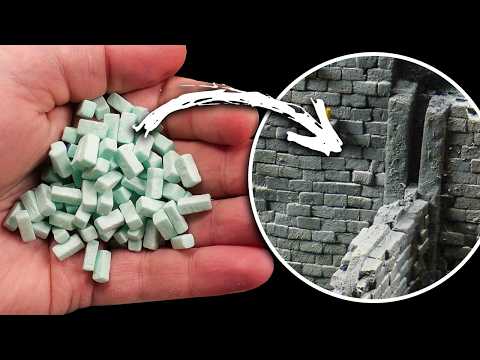
Black Magic Craft tutorial on building dungeon blocks

When it comes to printing or buying maze sections, there are a couple options. EnderToys makes a series of click-together dungeon tiles that would let you get a maze together rather easily. While they do come together quickly, their main disadvantage is that they limit you to using only 28mm-scale models - the walls are too small for anything else.

As for printed options, I initially used these miniature modular stone walls by QT_studio over on Cults3D. They have the advantage of being rather large sections of wall (the long sections are 1/16th of an inch shy of 4 inches long). However, because they’re not exactly 4” long, the missing 1/16th of an inch really adds up when you’ve got a three-foot long section you’re gluing together.

The Garden of Statues

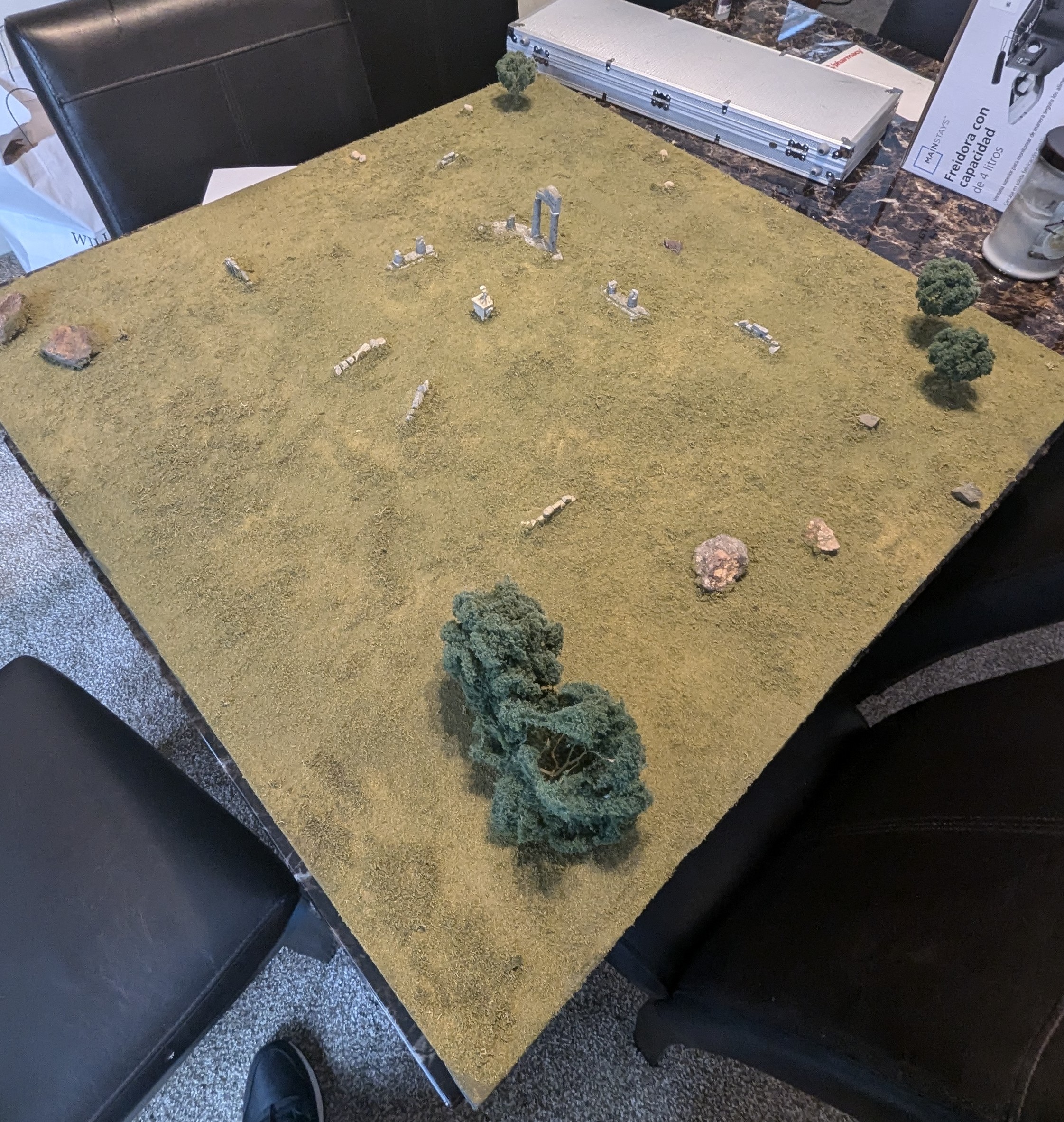
I’ll be honest and say that the board I built for The Garden of Statues (which I took to Fall In 2024) is the only board I’ve actually built for DEMIGOD. It’s not the best representation of what a DEMIGOD board could be, and there’s a lot I could do better to make it look more like what a DEMIGOD board should look like.

The Garden of Statues game board for DEMIGOD

So what would I do differently?

The first thing is that I would have a larger temple setup as a centerpiece. The few ruined columns I have don’t make nearly enough of a good center area. I’d recommend something like the Sarissa Precision temple or the Tartarus Unchained Temple of Athena by Gadgetworks.

Once I had the center temple built, I would add some subsidiary buildings such as a fountain or animal enclosure. If you want to get some fountains for your own board, Sarissa Precision makes a set of fountains perfect for 28mm. Or you can use the Kobold’s Craft video below to build your own.

Kobold's Craft tutorial on building fountains

Typically, Greek temple buildings sat inside of a larger area called a temenos, which was demarcated by a dry-stone wall called a peribolos. There exist a number of rollers to make your own stone walls out of XPS foam, but I’ve found that the most realistic way is to get a bag of pea-gravel from Home Depot or the like and start gluing. Once the stone wall is completed, add some olive trees around the outskirts.

If you want to see step-by-step how this new board will look, tune in next week!

The Island of the Cyclops

For the island of the Cyclops, you’ll need to cut an island from a large enough block of XPS foam, then attach it to your board. Once it’s attached, flock it with some sand and then paint the surrounding area ocean colors - blues, greens and blacks. If you want some inspiration for island colors, you’d do good to Google the Cyclopean Islands - they’re the islands off the coast of Sicily that Homer based Odysseus’s encounter with Polyphemus on. If you want a more hands-on tutorial, Play On Tabletop over on YouTube has a great tutorial wherein he builds a board to replicate Scarif from the Star Wars universe: all of these techniques can be transferred to your Island of the Cyclops board.

The Boar Hunt

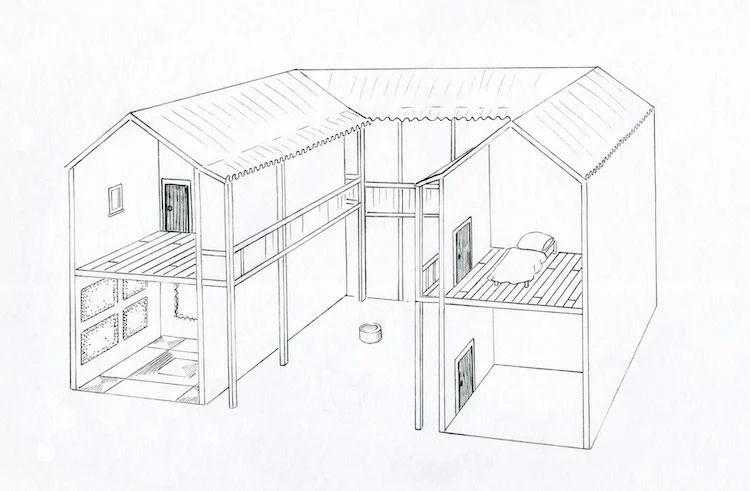
The board for “The Boar Hunt” is a little more free-form, described only as “a destroyed Greek town”. But what does that look like in practice? You’ll want a lot of broken columns, a destroyed temple or two, amd maybe some broken sections of road. Ancient Greek dwellings varied: depending on the wealth of your citizens, houses could range from two to twelve rooms, with those rooms split between multiple levels. Many dwellings had a central courtyard. An example layout is below.

Floor plan diagram of an ancient Athenian house

One or two of these, suitably ruined and combined with some other scatter terrain (such as this set) should stand you in good stead.

The Colchian Fleece

The layout for the Colchian Fleece is a pretty simple one. Multiple groves of trees (olive or otherwise) ring a central tree upon which hangs the fleece itself. You can get 28mm trees from a number of vendors, or make your own using a metal armature and some different kinds of flock. As for an actual Colchian Fleece model, I quite like this one by Steve Barber Models, just because it looks like a proper centerpiece.

The Centauromachy

A board for the Centauromachy quest is a little unique. Why? See that Athenian house lineart further up the post? The quest takes place entirely inside the central courtyard of a really, really big Greek house. So think fountains, trees, stuff like that. Essentially, you don’t really have a “centerpiece” here - you have a lot of smaller terrain pieces that impede player movement, but there’s not necessarily one terrain feature that unifies the whole board. If you wanted to, you could build your own Greek palace and put it off to one side of the board, letting the courtyard sprawl out from the interior and across the rest of the board.

So that’s how to build boards for the different quests you’ll encounter in the DEMIGOD core rulebook. If you’ve got any Qs about building your own board, feel free to shoot me an email at chris@no-name-games.com.

Tags: 28mm,Ancients,DEMIGOD,Terrain
Cover image for Miniature Range Options For DEMIGOD

Since releasing DEMIGOD in November of 2022, I’ve received several questions on where to get fitting miniatures to represent your heroes, minions and monsters - so much so that I’ve actually put a whole channel on the DEMIGOD Discord just to address the question.

DEMIGOD is a skirmish wargame set against the backdrop of Greek mythology, playable with as few as four figures on the board. It is manufacturer agnostic and the rules are flexible enough that you’ll find equivalent models for almost every model in the book in the catalogue of any company that makes an “Ancient Greeks” range.

With that out of the way, let’s talk manufacturers. There are a TON of miniatures manufacturers out there, and many of them make miniatures that would be compatible with DEMIGOD - perfect for representing your heroes, minions and monsters, but I’m just going to talk about the ones I’ve used for my own collection.

Heroes and minions

Since your heroes and minions are going to be constantly rotating through your warband, it’s important to have a lot of them! Let’s take a look at the best ways to fill out your adventuring party.

Victrix

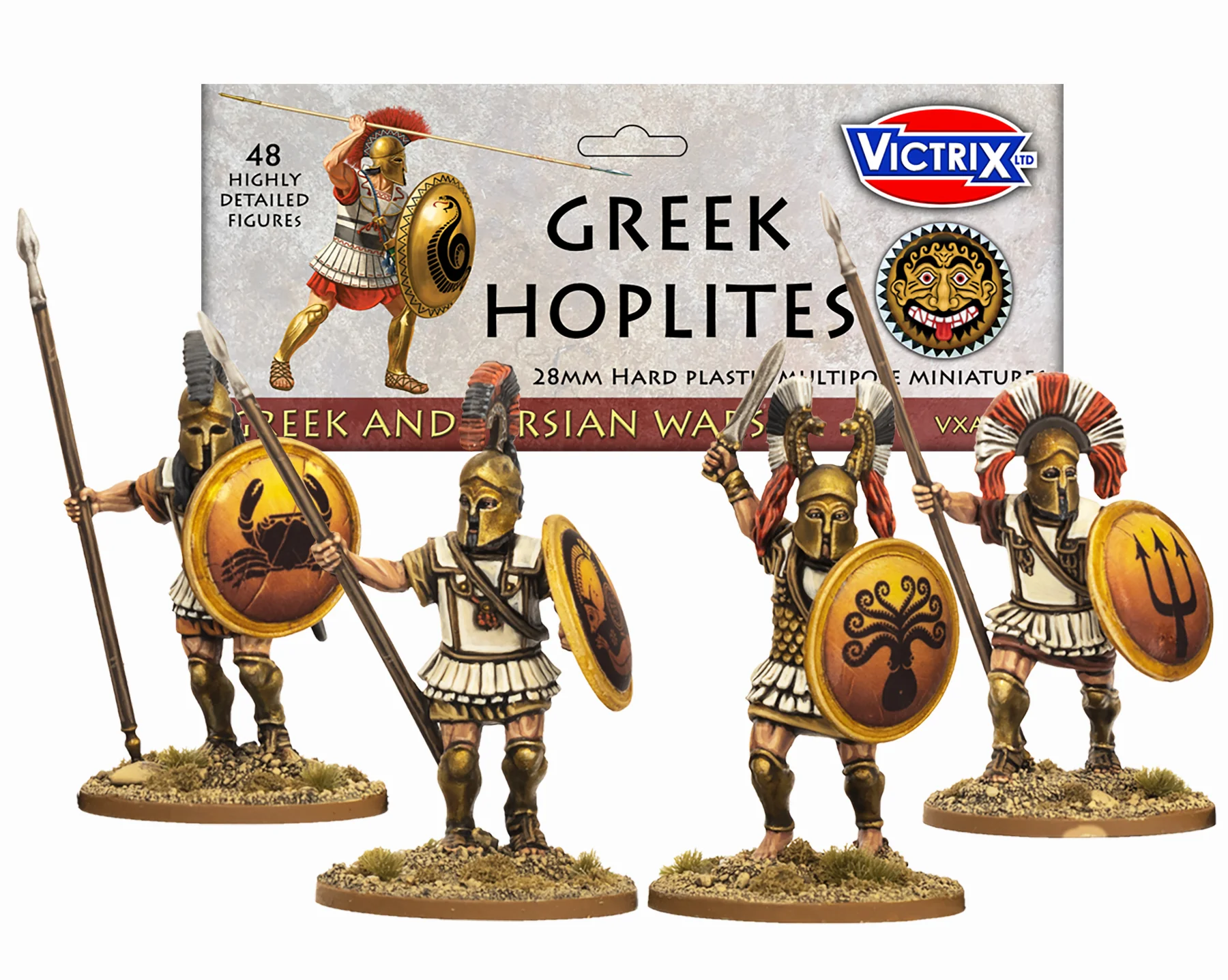
Victrix’s multipart kits are the absolute bang for your buck when it comes to building a DEMIGOD warband - so much so that they’re one of two manufacturers (the other being Warlord Games) that I point to when people ask what they need to get started with DEMIGOD. In addition to your bog-standard hoplites (perfect for your demigods themselves as well as, well, hoplites), Victrix produces a variety of kits that build almost every kind of minion you’d want to hire in DEMIGOD.

Now, for the purposes of a small-model-count game like DEMIGOD, the Victrix kits are a little overkill. The newest hoplite kit contains 48 figures, which is enough to build 16 warbands at the minimum warband size.

Victrix Greek hoplites miniatures

Additionally, the new kit seems tailor-made for skirmish games. Each sprue comes with seven different bodies plus a variety of different arms and heads, allowing you to create a warband that is dynamic and characterful even if your weapon choices are limited to swords, spears and shields (and a severed head!).

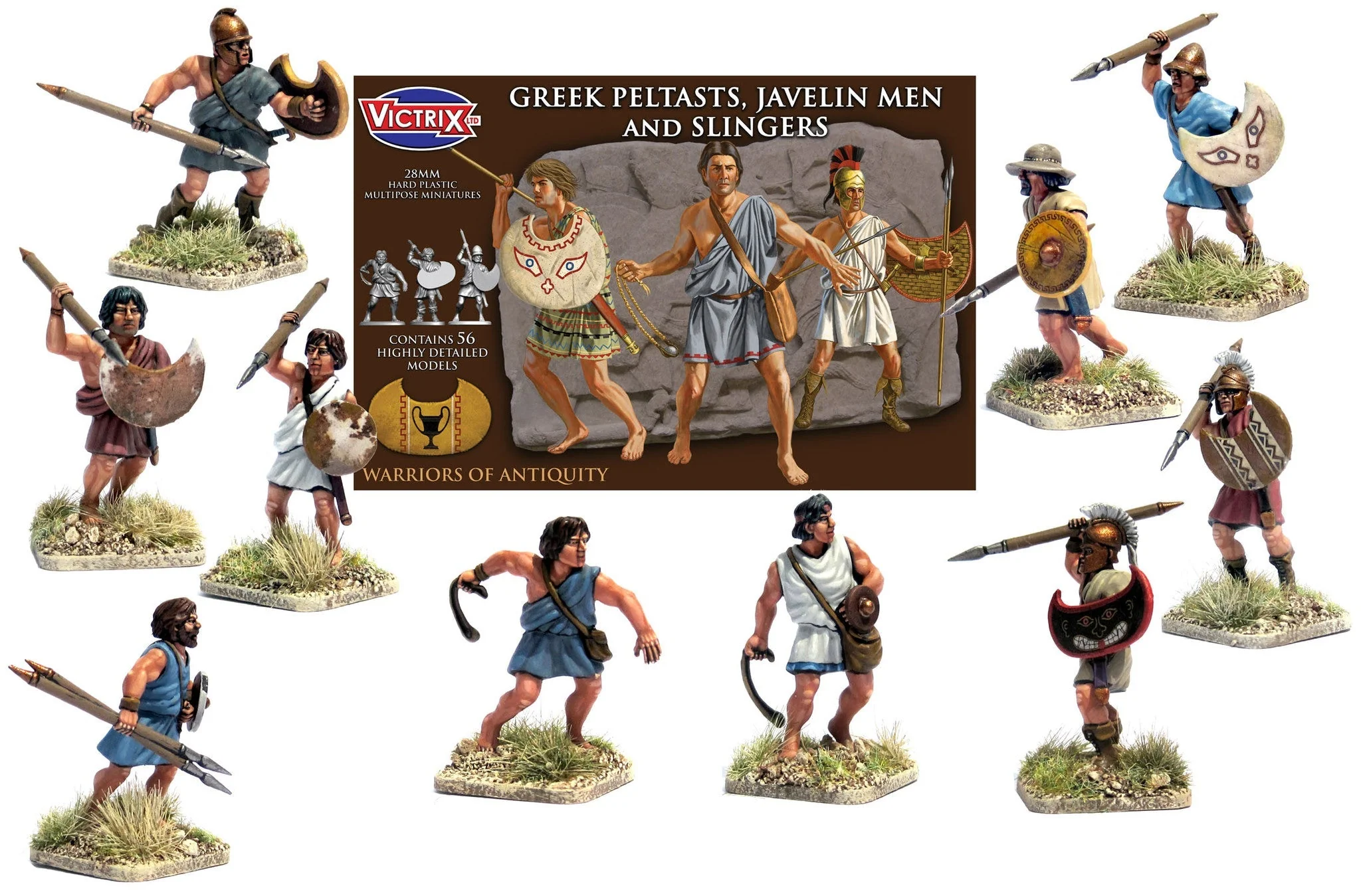
Victrix peltast miniatures

The peltast kit will fill out your ranged troops - giving you, as the box itself says, a range of peltasts, javelinmen and slingers. This gives you a variety of ranged options, from long-range slings to the peltast’s spear, which can cripple an enemy model as it attempts to close.

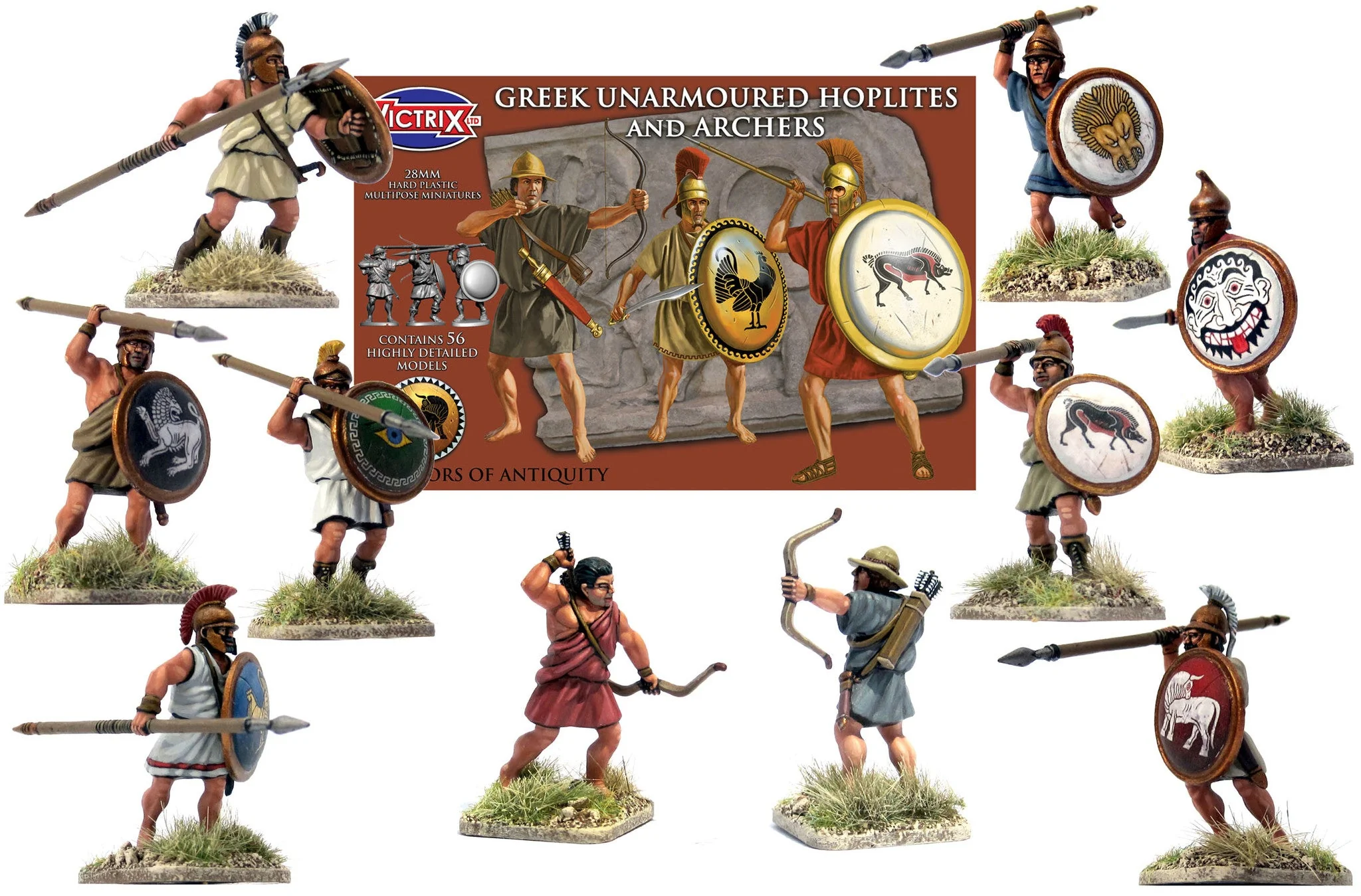
The last kit I’d recommend from Victrix is their “Greek Unarmored Hoplites and archers” kit, which gives you 48 hoplites in tunics and eight different archer options - perfect for novice demigods with not a lot of coin to their name or a minor hero of Apollo, the god of archers - or even just an archer minion himself!

Victrix Greek archer miniatures

About the only thing I’d call out with the last two kits is that the detail on them feels a little soft when compared to the new hoplite kit. Hopefully we see a re-release of these kits with some better detail!

Wargames Foundry

Metal miniatures manufacturers that also hail from Great Britain, Wargames Foundry (WGF) is the brainchild of Cliff and Brian Ansell. For those of you who are Games Workshop grognards like me, Brian Ansell is also one of the founders of Citadel Miniatures, which later became part of Games Workshop.

All of WGF’s kits are 1 to 3-piece metals: depending on which kit you get, you’ll have to attach a spear, a shield, neither, or both. In terms of the spears themselves, I recommend replacing the included spears with the NSS102 spears from North Star Military Figures, Artizan Designs, or Crusader Miniatures - they’re a little thicker and fit the models’ hands better, although they do need trimmed to size.

This makes them really fast to get onto the table - there’s not a ton of assembly required. At the same time, the poses tend to be rather generic, and some of the hoplite poses take a little finagling to get the spears to sit properly.

Almost all of the sub-ranges under WGF’s “World of the Greeks” range are suitable for DEMIGOD - in fact, the only range that I’d say isn’t suitable is the Thracians, and even then only because they don’t fit the “hoplite aesthetic” of the rest of the range.

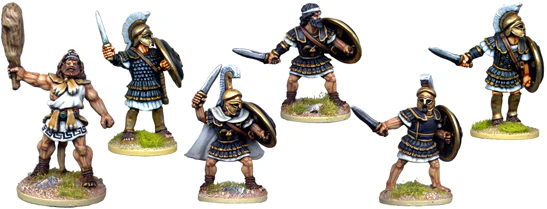
Perhaps my favorite kit is WG162 “Herakles and the Argonauts”, which features 5 models with swords and shields plus a sixth representing Herakles himself - perfect for a Major Hero plus several Minor Heroes and the Hero of Legend, Herakles!

Wargames Foundry Herakles and the Argonauts miniatures

3D Breed

The newest addition to my collection and the only non-physical hero/minion models on this list, 3D Breed’s “March to Hell: Rome” range is perfect for games of DEMIGOD. Not only do they have a sample hoplite, but the whole range should get your DEMIGOD warband pretty well stocked.

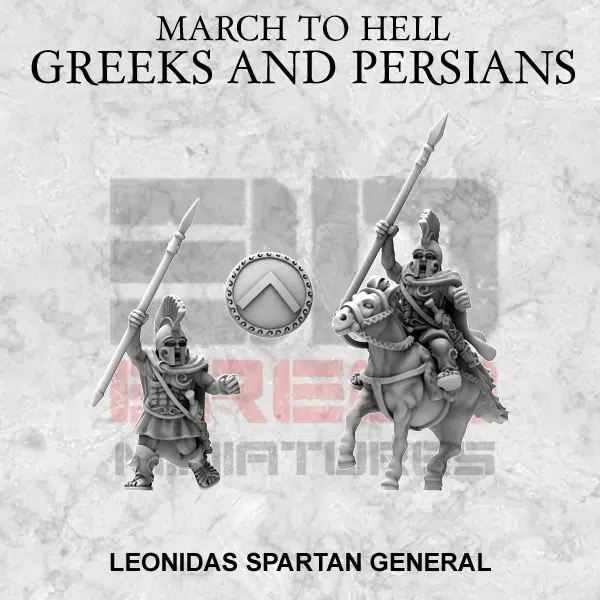
You can find STLs for Jason and the Argonauts, plus hoplites (both in armor and tunic), psiloi (slingers), peltasts and Cretan archers. There’s also a separate, smaller range for Spartans that’ll give your warband a little flavor with Spartan hoplites and an STL for Leonidas himself - perfect for your Major Hero!

3D Breed Leonidas miniature

Monsters

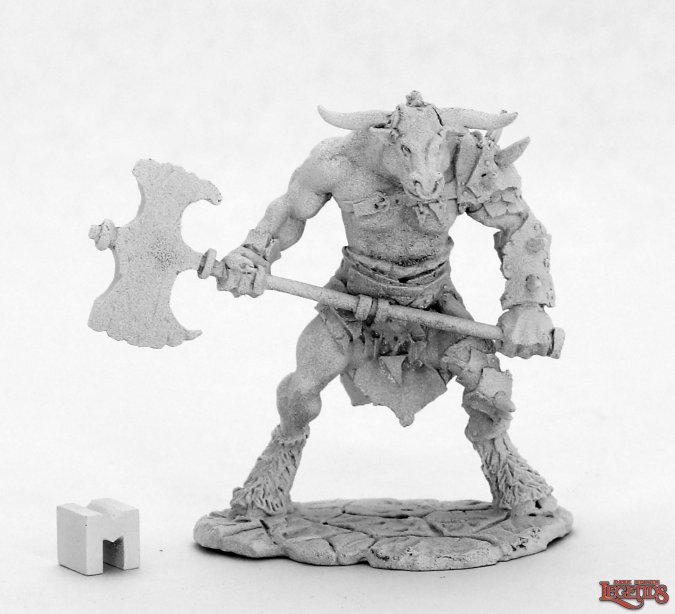
When it comes to the monsters that stalk through the annals of Greek antiquity, a 3D printer is going to be your best friend. While there are a couple metal and plastic miniatures out there, (WGF has medusae and a kit that includes Theseus, the Minotaur, and some pillars, while Reaper’s metal Bloodhoof miniature is a particular treat), the vast majority of Greek monstrosities are found in the land of liquid resin.

Minotaur miniature

The Medusa by ArtOdyssey over on Cults3D was the one I ended up using for my demo game of “The Garden of Statues” at HMGS Fall In this past year, and it’s probably the only one I like out of the ones I’ve found - that is, it’s the only one that isn’t gigantic and doesn’t come with added weapons.

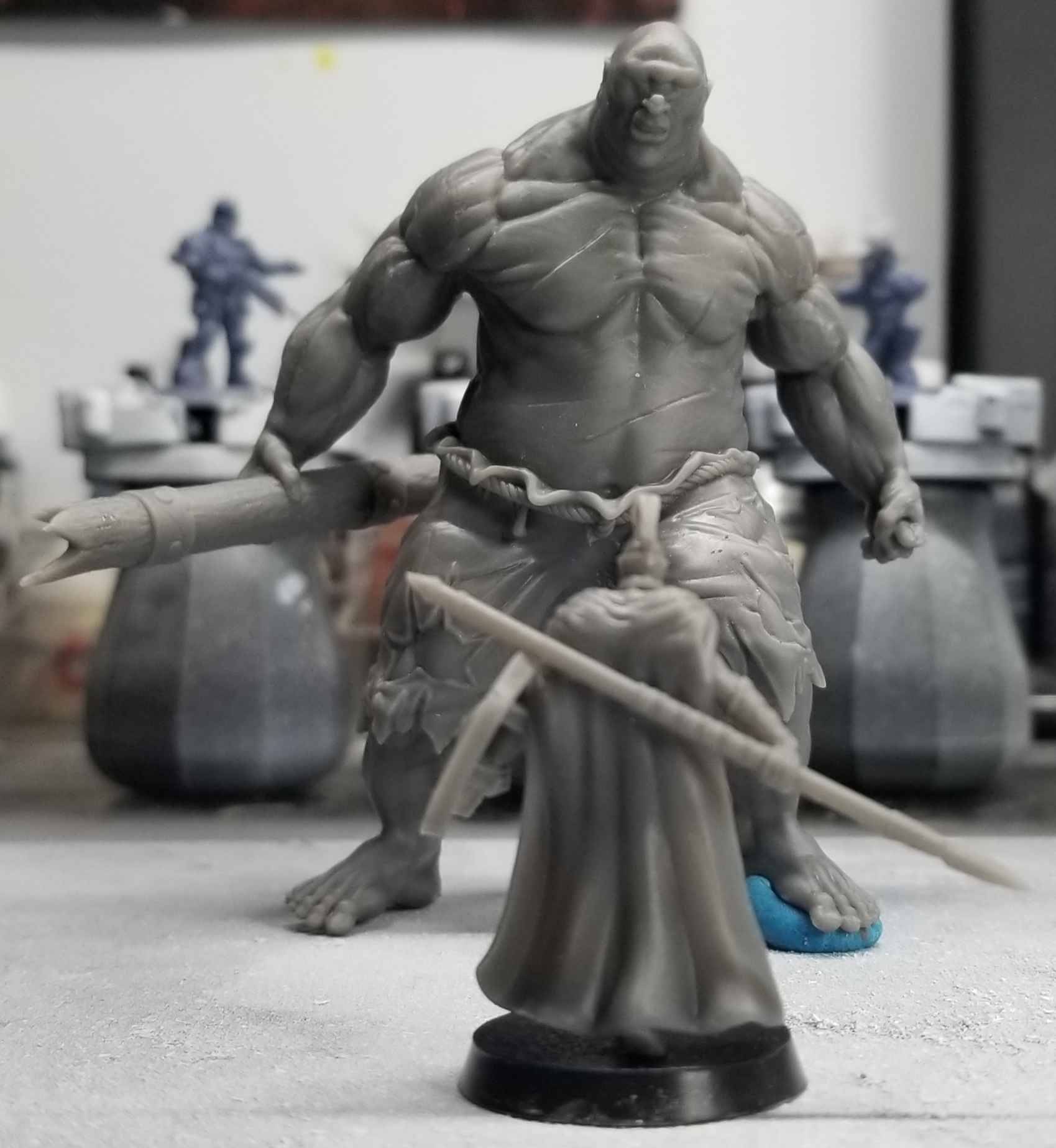
There’s one other model I’d like to call out, just because of how awesome it looks: the Cyclops by “clynche art” over on MyMiniFactory. One of the Discord users printed it and posted a picture that came out looking so awesome.

Polyphemus the Cyclops miniature

There are way more options than these when it comes to models that mesh with Greek antiquity. One of my goals when I wrote DEMIGOD was to let my players step into the sandals of some of the heroes of Greek mythology, so go forth and find the models that speak to your hero’s soul!

Buy DEMIGOD from No Name Games.

Tags: 28mm,Ancients,DEMIGOD,Hobby
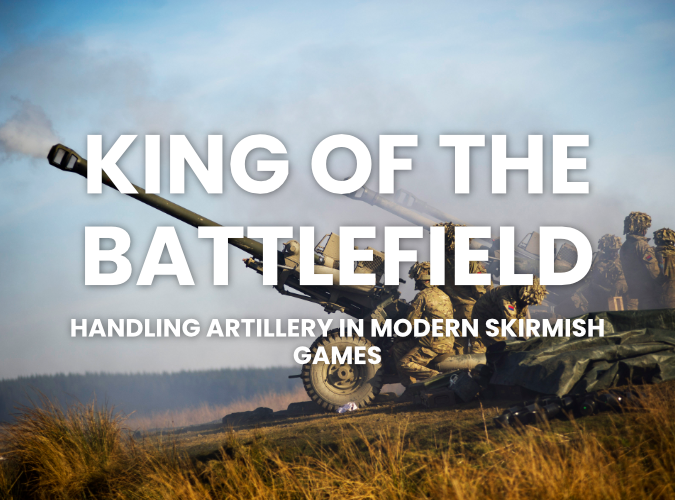
Cover image for Handling Artillery In Modern Skirmish Wargames

The Nature Of Artillery

Before we can decide how to represent artillery in a tabletop wargame, first we have to settle on a definition of what artillery is. At its most basic, artillery is just a class of ranged weapons that launch munitions far beyond the range of human or powder-powered smallarms (bows, slings, crossbows, rifles, etc).

From its first incarnation as fairly-immobile siege engines used to breach enemy fortifications, artillery has evolved both in mobililty (horse-drawn and wheeled cannons all the way up to man-portable mortars) and lethality (solid shot all the way up to modern high-explosive rounds).

Since modern artillery generally fires high-explosive rounds unless directed otherwise, it can be assumed that the artillery a platoon or company commander would have access to would be firing this as well.

Artillery As Area-of-Effect (AoE) Weapons

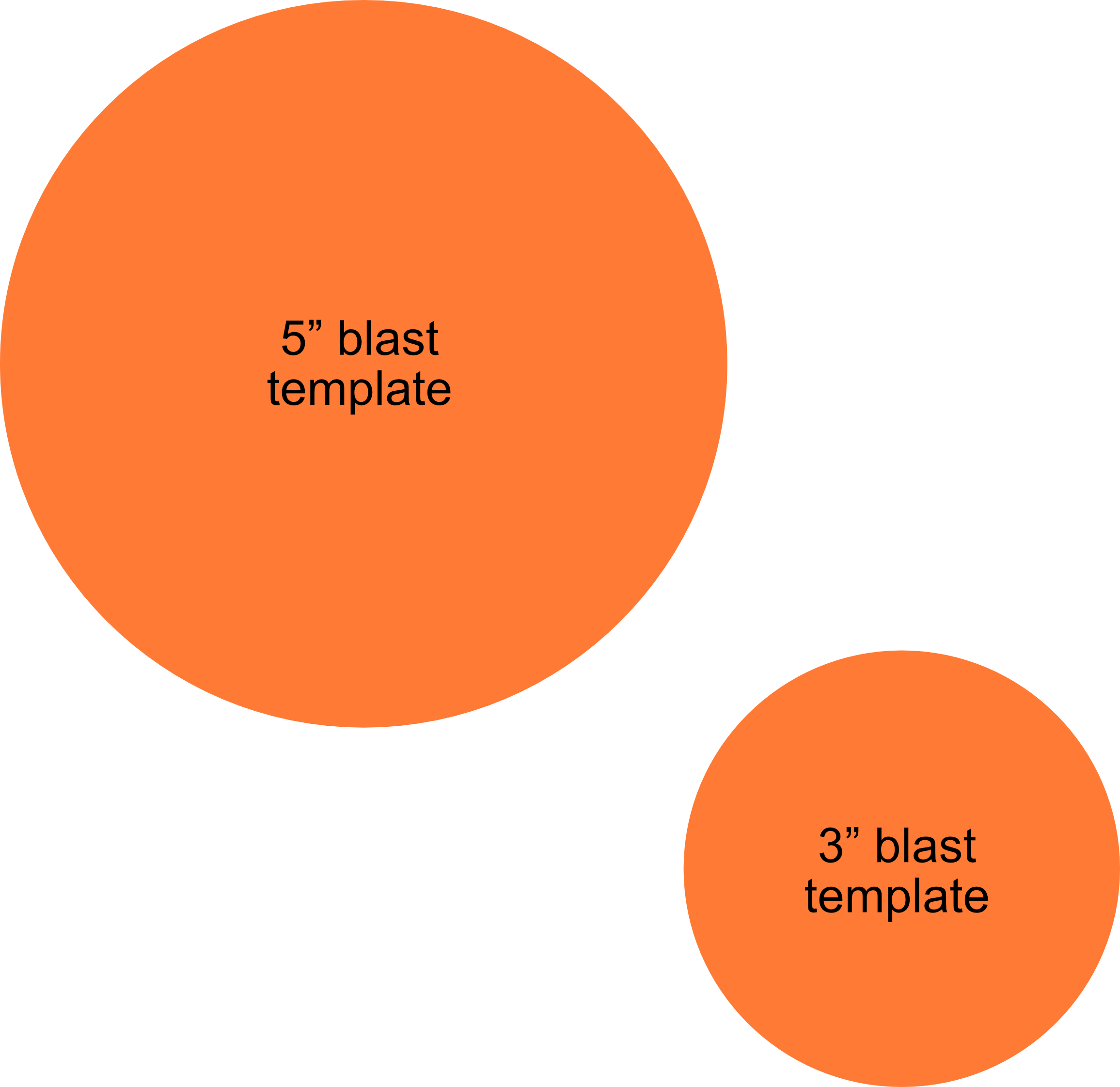
The use of high-explosive ammunition usually means that when artillery shows up in a tabletop wargame, its destructive power is represented by a blast template (shown below). Usually, larger artillery pieces such as towed guns use the 5” template, while smaller guns like mortars use the 3” template.

Blast templates of various sizes for wargaming

But why is this the way things are done?

Quite simply: because you need a way to designate artillery that is visible to both you and your opponent. But, if the rules for them are written correctly, templates can become much more than just a hammer of doom that hits your opponent. One way to handle this is to place the template during your turn, but have it “go off”/take effect during or after an opponent’s movement phase.

Not only does it give your opponent a chance to react to the incoming template, but it also opens up tactical possibilities, as well. You can place templates to funnel enemies in a certain direction or deny them a section of the tabletop - both things that artillery is used for in real life.

Artillery Without Templates?

But what if we don’t want to use templates? They’re one more thing to ask players to have on hand, they can get lost easily, etc. Instead, we can designate a square of some distance (Chain of Command uses 18”, for example) and use that as your template.

Another way to handle it is to use the intrinsic bases of the troops themselves, like Crossfire does. The Crossfire rules essentially say “pick a squad, roll dice against them, any other squads within 1 stand/base-length are suppressed”.

Whichever way you choose to handle it, your system needs some way to designate that every unit in a given space is being hit by incoming artillery.

”Spread out - they got us zeroed!” - bunching up, AoE and morale

Being hit by incoming artillery tends to degrade unit morale, and units with degraded morale tend to bunch up, making them easy targets for AoE weapons like artillery and machine guns.

One way to represent this is by having the cohesion distance inside a unit decrease every time the unit fails a morale check, to the point where every model in the unit is base contact with every other model in the unit - a perfect target for a template.

Having unit cohesion slowly degrade as morale degrades ties into making morale failure a more gradual thing, which I discussed in my post on handling morale in miniature wargames a couple months back.

To recap

  • AoE can give you tactical choices depending on how you employ it.
  • AoE templates can act like interactive terrain.
  • tie together AoE weapons, morale and unit cohesion.
Tags: Modern,15mm,Rules
Cover image for Battle of the Hot Gates

Introduction

The year is 480 B.C.E. The place, Thermopylae. Across the narrow pass stands the thousands-strong Persian army, ready to bring Greece to her knees. With you stand seven thousand Lacedaemonians, Mantineans, Tegeans, Thespians, Phocians, Locrians and others - Greeks all, ready to stand against the menace invading their shores. News has also reached you that the main Spartan army is on its way: all you have to do is hold off the Persians as long as possible.

The Forces

The Greeks have 45 ranks of hoplite infantry. Six of those ranks are Spartans, and have the following special rule:

Spartan Courage: Spartans are not pushed back when they take casualties.

The Persians have 60 ranks of infantry and archers, including five ranks of Immortals, who have the following special rule:

Constant Strength: If the Immortals do not lose a full rank by the end of combat, replace the lost models at the back of the unit.

Setup

Play the game on a 6’ x 4’ board. Deploy the Greeks up to half the table’s width forward of their board edge, with a wall placed halfway into their deployment zone. Any units immediately behind the wall get +1 Push when being charged by units beyond the wall.

Deploy the Persians up to 12” forward of their board edge.

The game is played for six turns.

Victory Conditions

The Greeks score a major victory if there are still Greek units on the field and Leonidas is still alive by the end of the sixth turn.

The Greeks score a minor victory if there are still Greek units on the field by the end of the sixth turn.

The Persians score a victory if there are no Greek units left on the field by the end of the sixth turn.

If you’d like this scenario as a PDF, you can find it here.

Tags: 28mm,Ancients,Scenarios,Othismos
Cover image for Scenario Creation In Miniature Wargames

When it comes to writing your own miniature wargame, scenario creation is one of those things that can’t be ignored. Good scenarios will draw players into the game (and maybe get the gears turning for writing their own missions/quests) while bad ones will leave your ruleset languishing on the bookshelf. So how do you write good scenarios?

Consider Your Game And Its Objective

Before you start writing your scenarios, consider the type of game you’re making. Some scenario or mission types might fit some games better than others. For example, an “Annihilate” scenario fits much better with a platoon-level skirmish game than it does with one where you’re a wizard tasked with finding and safeguarding ancient knowledge.

What makes a good wargame scenario?

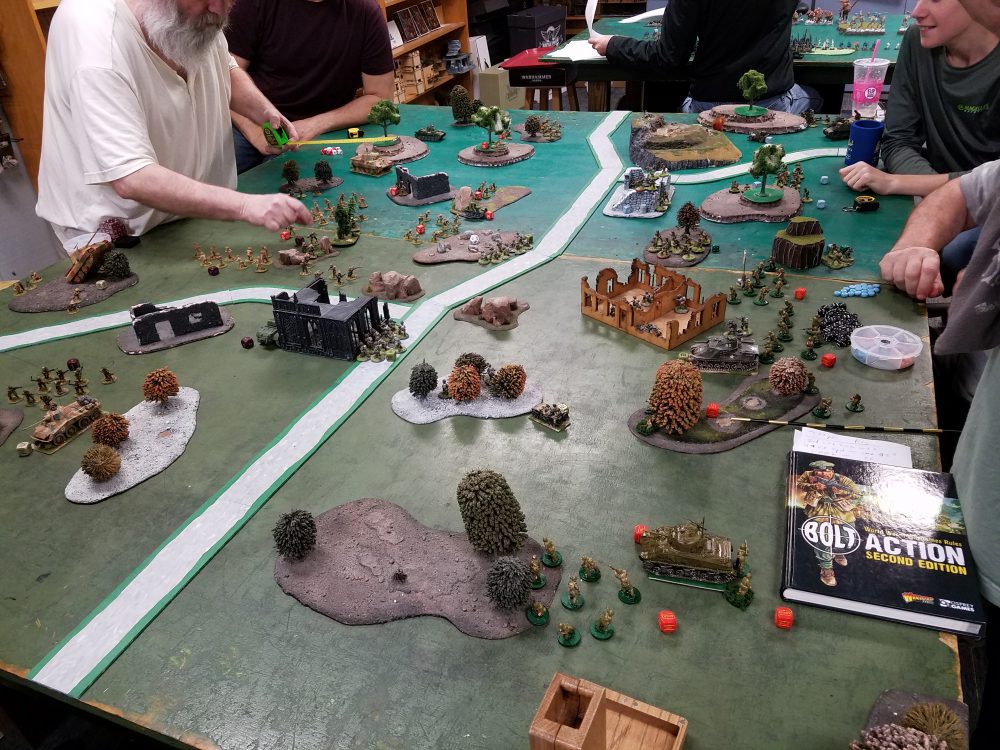
Bolt Action miniatures wargame in play

Good scenarios, whether they’re for 10-model-per-side skirmish games or company-level WWII wargames, should:

  • Be interesting. If the scenario doesn’t interest you, why are you looking at it?
  • Offer a challenge to everyone playing, whether that’s through unequal forces, different objectives, or some other factor.
  • Offer a number of different, conflicting choices that players must make in order to win. The winning move should not be obvious each time.
  • Have clear win conditions.
  • Have different win conditions for each player. While “Annihilate” might be fun the first time through, by the fourth or fifth, it gets boring if that’s the only win condition for both sides.
  • Be thoroughly tested.

In order to showcase these concepts, we’ll take a look at them through the lens of my favorite WWII battles, the assault on Brecourt Manor.

Piquing player interest

So how do we get players interested? The best way is to give them context - why are they fighting this particular scenario? Are they Dick Winters at Brecourt Manor? Leonidas at the Hot Gates? Having this sort of context makes for a much more thrilling scenario than “first to five Victory Points wins”. If you want an example of these principles in action, check out the Thermopylae scenario I wrote for OTHISMOS.

Here’s an example:

June 6, 1944.

Le Grand Chemin, France.

It is the morning of D-Day. After a hellish drop that left E Company scattered all along the Cotentin Peninsula and multiple engagements through the pre-dawn hours, you have finally managed to link up with battalion HQ at the hamlet of Le Grand Chemin. By morning, only 23 men from Company E have assembled. Regardless, there’s work to be done - orders have come down from Captain Hester: “There’s fire along that hedgerow there. Take care of it.”

This little bit of fluff tells players who they are (Dick Winters/Company E) and what they’re doing - more than enough to get a game going.

Keeping things challenging

It’s not enough for a scenario to have good fluff - it needs to be challenging for all of the players involved. The challenge can be scalable - introductory scenarios need to be relatively uncomplicated to familiarize players with the rules - but the outcome needs to not be a given every time. For tips on structuring that introductory experience, see my guide on creating quick start guides for wargames.

An important part of making things challenging is that every challenge the players face needs to be one they can surmount. If a player needs to get across to the other side of the board in six turns, the board needs to be small enough that the slowest of his units can cross it in six turns.

Challenges for your players can be symmetric (offering equal risk and opportunity to all sides) like two similar armies facing off against each other on an open field: alternatively, obstacles may be asymmetic - fewer troops vs more, more experienced troops vs conscripts, etc.

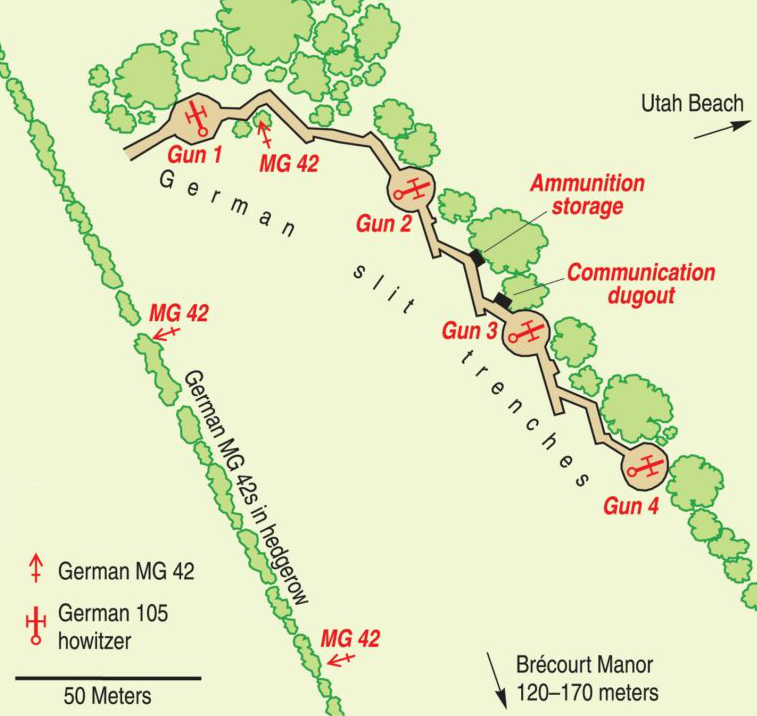
Brecourt Manor offers a good example: Winters had 22 other paratroopers with him, compared to the 60-or-so Germans manning the artillery battery - about a 3:1 numerical disadvantage. The Germans also had double the number of machine guns (4 to Winters’ 2) which the Americans negated using the element of surprise - something you can simulate by giving the American player the first turn.

The choice of choices

Map diagram of the Brecourt Manor assault

All scenarios should present your players with obstacles, and each obstacle should present players with a choice - preferably with more than two options. This gives your games an element of unpredictability. Will your men deploy in the trees to the north, or will they attempt to creep along the southern hedgerows and take the MG crews by surprise?

Never give your players just one way to solve a problem - single-solution problems never make for interesting games. Conversely, don’t make the solution to a problem something that’s totally dependent on chance (such as reinforcements arriving on a roll of 6, which might never happen).

When it comes to designing routes to reach an objective (and counters to those routes), not all of them need to be promising - they just have to all be possible under the right circumstances.

Different paths to victory

When it comes to writing good victory conditions, make sure you do the following:

  • Describe exactly what must be done to be considered the winner.
  • Provide different win conditions for each side.

Using our Brecourt Manor scenario as an example, the Americans might have the following victory conditions:

  • Major Victory: Destroy all four guns and return with the German map.
  • Minor Victory: Destroy at least 2 of the guns and return with the German map.

Conversely, the Germans might have these victory conditions:

  • Major Victory: Inflict at least 50 percent casualties on the American forces and have at least 3 guns intact at the end of the game.
  • Minor Victory: Inflict at least 25 percent casualties on the American forces and have at least 2 guns intact at the end of the game.

Giving both sides different victory conditions, as well as providing conditions for both major and minor victories, makes sure that no game is exactly the same - and that players have a reason to keep fighting on once things start going south.

Testing till it breaks

Once you have your scenario all written up, it’s time to test it. The best players to test these sorts of scenarios are malignant ones - people who want to take advantage of any and every loophole in the scenario and exploit it so that they can win. Make sure you run through the scenario at least 2-3 times so that you can iron out the defects. You’ll know you have a good scenario when, despite every attempt of your players to break it, it still turns out as a good game for both sides. For more on playtesting methodology, see the second post in my series on miniature wargames design.

Tags: Rules,Scenarios
Cover image for Handling Morale In Miniature Wargames

When it comes to miniature wargames rulesets, morale rules are one of those things that are conspicuous when they’re either absent or done badly. What is “morale”, though? And how do you write good morale rules?

What Is Morale?

Morale is usually defined as “the confidence, enthusiasm, and discipline of a person or group at a particular time”, or something similar. So how does that translate to tabletop wargames? Typically, “morale” is represented by some statistic (Leadership, Motivation, Resolve, Will or similar) that is then tested against at pre-determined intervals (when a unit takes X number of casualties, if a unit leader is killed, etc). If the unit passes the morale check, it stays put. If not, bad things usually start happening, ranging from the worsened combat effectiveness all the way to outright routing.

Morale As A Finite Resource

While morale is typically treated as something that functions as a pass-fail (units are OK until they aren’t), there is evidence that morale is much more finite than that. A group of researchers from the Florida State, Florida Atlantic, and San Diego State universities studied the concept of “ego depletion” - that is, that willpower is a finite resource. What they found was this:

Saying no to every naughty impulse, from raiding the refrigerator to skipping class, requires a little bit of willpower fuel, and once you spend that fuel it becomes harder to say no the next time. … As your ego depletes, your automatic processes get louder, and each successive attempt to take control of your impulses is less successful than the last.

So how does this apply to morale? The things that discipline guards against - turning tail and running, or hiding in your trench till the shooting stops - are some of the “naughty impulses” that the quote above talks about. They’re things that any unit of soldiers has to take a conscious action not to do. However, that conscious action gets easier and easier the more training/discipline a unit of soldiers has to fall back on: a unit of untrained conscripts is much more likely to rout when faced with oncoming fire than a group of hardened veterans.

Morale As A Determining Factor

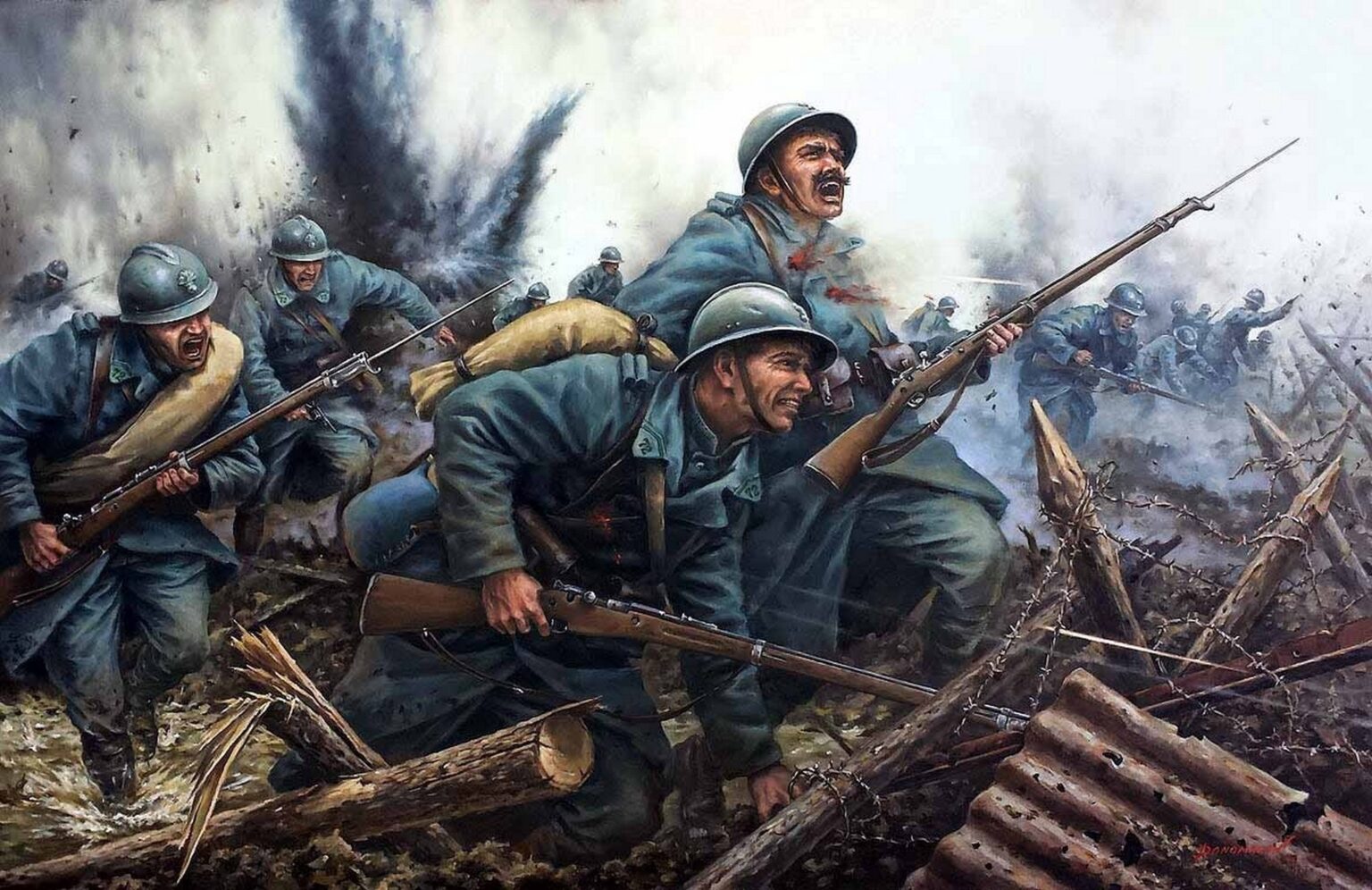
French infantry detained before German fences during World War I

When it comes to winning a battle, morale carries much more weight than anything else - it’s much easier to make someone run than it is to kill them outright. So how does that translate to writing wargaming rules? Well, it means that, from jump, units will seldom fight “to the last man” - there will be some point long before that where they surrender or flee. It’s one of the reasons why I never liked the “Last Man Standing” rules in Warhammer 40,000 - that “last man” is far more likely to turn tail and book it than he is to stay on the battlefield.

Okay, so we’ve gotten rid of “Last Man Standing” and its ilk - now what? Decide when and how the units in your game will break and retreat. The tried-and-true “wargaming break test” is 50% - that is, a unit will only start testing for morale once it’s received 50% (or more) casualties. History, hower, tells us that that’s not the case, that units (and armies above them) break long before they reach 50% casualties - for example, the French at Agincourt retreated after losing 6,000 of their 15,000 men (about 40%). At Crecy, the French only lost 20% (4,000 out of about 20,000) before they retreated. This has big implications for how you write scenarios - if units break after 20% casualties, the tempo of the game changes dramatically.

You can still use 50% as a break metric - it’s a standard for a reason - but it’s much less realistic and makes it that much harder to use morale as a gameplay element unless all of the armies in the setting have crappy morale to begin with.

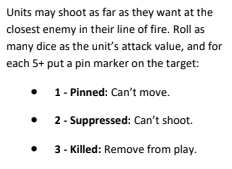
What to do instead? There are a couple of options: either have morale checks happen (with appropriate modifiers) every time a unit takes casualties, or make morale a function of weight of fire. What do I mean by that? Some games, such as One Page Rules’s Covering Fire and Crossfire before it, determine a unit’s ability to function based on the amount of fire it receives from the enemy.

Example shooting rules from a wargame rulebook

Both of the options I suggested turn morale from a pass-fail mechanic into something that’s much more gradual. Units accumulate stress until finally they break. This, I think, better represents how morale actually functions on a battlefield - a spending of willpower fuel that increases or decreases based on accumulated stressors. This graduated approach also has implications for things like artillery, which tend to accelerate that stress accumulation.

A Question Of Leadership

So how do you handle Leadership in a graduated system like this? You have a couple options, depending on the scale of the game you’re writing. If you’re running something smaller scale (platoon level or below), you can give your sergeants/leaders different morale values and have squads use those for their tests as long as the leader is still alive. At company level (or larger), have command units give infantry/vehicle units a +1/+2 to their morale checks (depending on the type of command unit, of course).

Final Thoughts

Hopefully this shines a bit of a spotlight on morale mechanics and how they can be more than just pass-fail single-dice-roll tests. I’m not advocating a “best method” for morale tests - just that, if you’re writing morale rules, there’s other ways to do it than what’s been the “bog standard” of gaming for years.

Tags: Modern,Rules
Cover image for A Quick Guide To Getting Into Miniature Wargaming

Want to get into wargaming, but have no idea where to start? The explosion of the hobby in the 2000s has led to the creation of a dizzying number of new miniatures creators and new games to go with them. So where’s an interested player to start?

Find A Game Store Near You

Wandering into the friendly local game store (FLGS) or comic shop is often most people’s first encounter with miniatures wargaming. Punching in a Google search for “tabletop gaming stores near me” will give you a good list. Retailers such as Games Workshop and Warlord Games usually have store locators that you can search, too - popping down to one of the stores on the list is a great way to get introduced to the hobby.

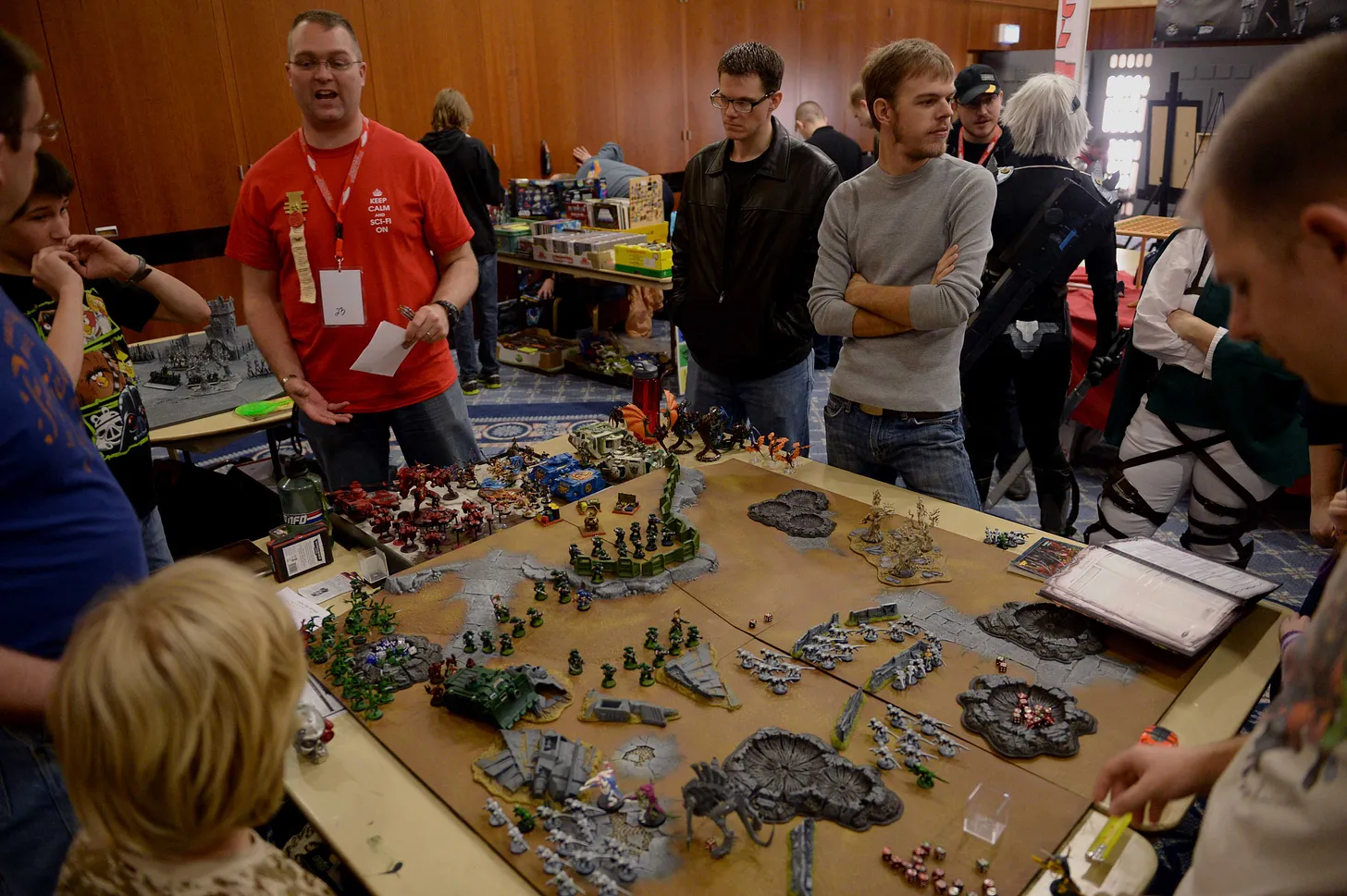
Players gathered around a table playing a Warhammer game

What If You Can’t Find An FLGS?

While wargaming started as a two-player (or more) hobby, more and more companies are releasing games or supplements that cater to the solo wargamer. Osprey Games released Rangers of Shadow Deep in 2018, a dark fantasy-inspired solo game set in a fantasy world created by Joseph McCullough. McCullough’s fantasy skirmish game Frostgrave also has an expansion, Perilous Dark, that focuses on solo play. Other games and supplements include Kontraband for Patrick Todoroff’s Zona Alfa, Five Leagues From The Borderlands (and the sci-fi version Five Parsecs From Home), Perilous Tales, Fallout: Wasteland Warfare, Skyrim: Call To Arms.

I’ve also released my own solo wargame, a Greek-mythology-inspired skirmish game called Demigod.

Pick Miniatures That You Like

Once you’ve found a place to play, the next step is to find miniatures that you actually want to play with. There are miniatures out there for nearly every period of history - from the truly ancient to more modern wars and even the far-flung future. Finding miniatures that you like is a great way to keep yourself in the hobby - after all, miniature wargaming grew out of the hobby of collecting model soldiers.

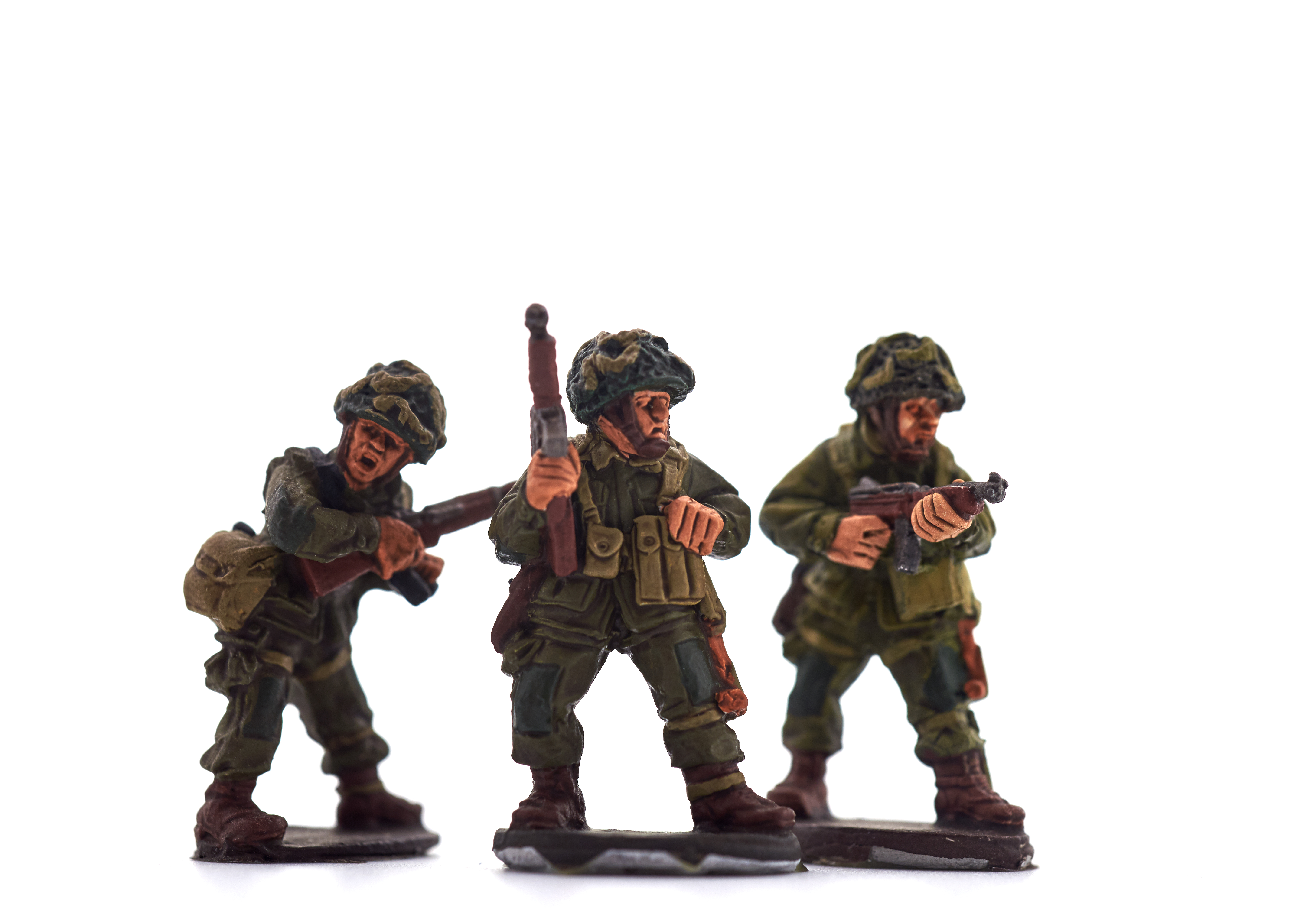
Collection of painted miniature soldiers

Already Have Miniatures? No Problem

More and more, miniatures wargaming is moving toward the concept of “miniature agnosticism” - that is, the fact that you don’t need to use a company’s boutique miniatures to play their games. And some companies are taking it even further than that - releasing just the games themselves and expecting players to supply the miniatures. Examples include Crossfire (platoon-level WW2 gaming), as well as every single ruleset One Page Rules has put out.

Play The Games You Want To Play

Once you’ve got miniatures and a place to play, decide on what game you want to play. Rules exist for almost any setting and scenario you can think of, from ancient warfare to fantasy skirmishes. Want to replay Caesar’s conquests in Gaul? Check out Warlord Games’ Hail Caesar. Refight the American Revolution with Black Powder. For fantasy systems, pick between Warlords of Erewhon, Kings of War, Oathmark and more. In terms of sci-fi, the big boy on the block is Warhammer 40,000, but others exist too - including Mantic Games’ Warpath.

The most important tip I have for you, though, is this: get out there and play! Even if you don’t own exactly the right miniatures or they aren’t painted in exactly the right colors, what matters is that you’re out there and playing. Miniature wargaming - whether solo or against an opponent - is a great way to explore your interests and meet new people, to boot! So get out there and play on!

Tags: Hobby